
What Probate Covers in Charlevoix County
Probate work follows a person's estate and protects those who cannot manage their own affairs. In Charlevoix County, the docket covers wills and decedent estates. It also covers adult guardianship, minor guardianship, adult conservatorship, and minor conservatorship. Cases involving developmentally disabled individuals and mental health proceedings run through the same court. Legal name changes are handled here as well. Each filing builds a file of petitions, orders, inventories, and annual reports. Many of these Charlevoix County probate records stay open to the public. Others carry tight access limits set by state law. Divorces and marriage licenses do not run through probate; those live with the circuit court and appear in the county's marriage and divorce records.
One local court handles all of this. The Charlevoix County Probate and Family Court sits on the second floor of the county building in the city of Charlevoix. It is branded as the 7th Probate District. It also serves as the 33rd Circuit Family Division for juvenile matters. Judge Hon. Valerie K. Snyder presides, and Court Administrator Tim Smith manages daily operations. Estates, guardianship, conservatorship, mental health cases, and juvenile programs all sit under one roof.
The court's own 7th Probate Court overview page lays out the full menu of case types it hears.
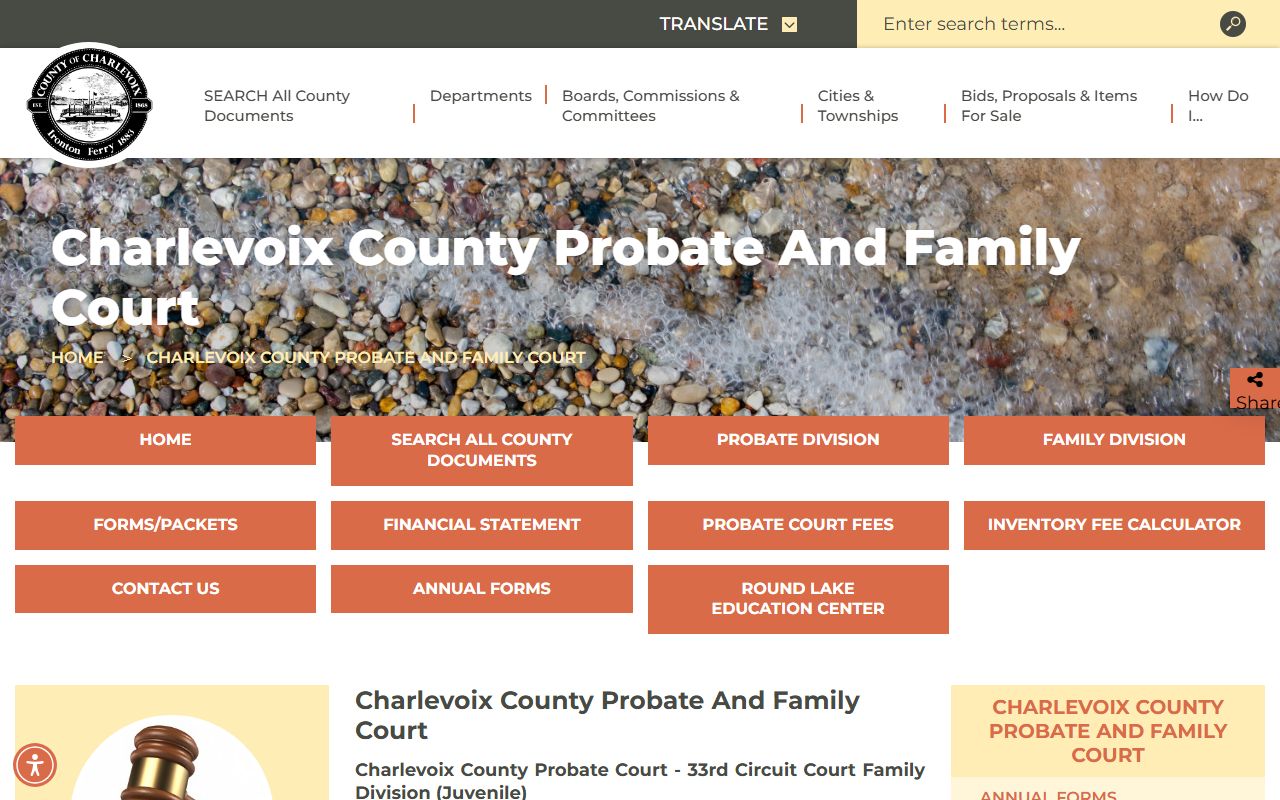
That page also links to forms, annual filing tools, and the inventory calculator that estates need to value assets.
Probate Terms Defined
Probate paperwork leans on a handful of legal terms. Knowing them makes a Charlevoix County probate record far easier to read. The words below show up across wills, estate files, and guardianship petitions.
- Testator
- A person who makes a valid will to direct how their property passes after death.
- Executor
- The person named in a will to gather assets, pay debts, and carry out its terms. Michigan often calls this role the personal representative.
- Intestate
- Dying without a valid will, so state law decides who inherits the estate.
- Guardianship
- A court appointment that gives one person authority over another's personal care and daily decisions.
- Conservatorship
- A court appointment to manage the money and property of someone who cannot handle it alone.
Wills for Safekeeping
Charlevoix County residents can leave an original will with the court for safekeeping. This service keeps the document secure until it is needed. Only original wills and codicils qualify, and only from county residents. The will must arrive in a sealed #10 envelope. The outside of that envelope must show the person's full name, complete address, Social Security number, and date of birth. A clerk date-stamps the sealed envelope when it is filed. The deposit fee is $25. Retrieval during the person's lifetime is free, though a later redeposit costs $25 each time. It is a smart step for anyone who worries a home copy could be lost or damaged.
The county's wills for safekeeping page spells out every rule for deposit and retrieval.
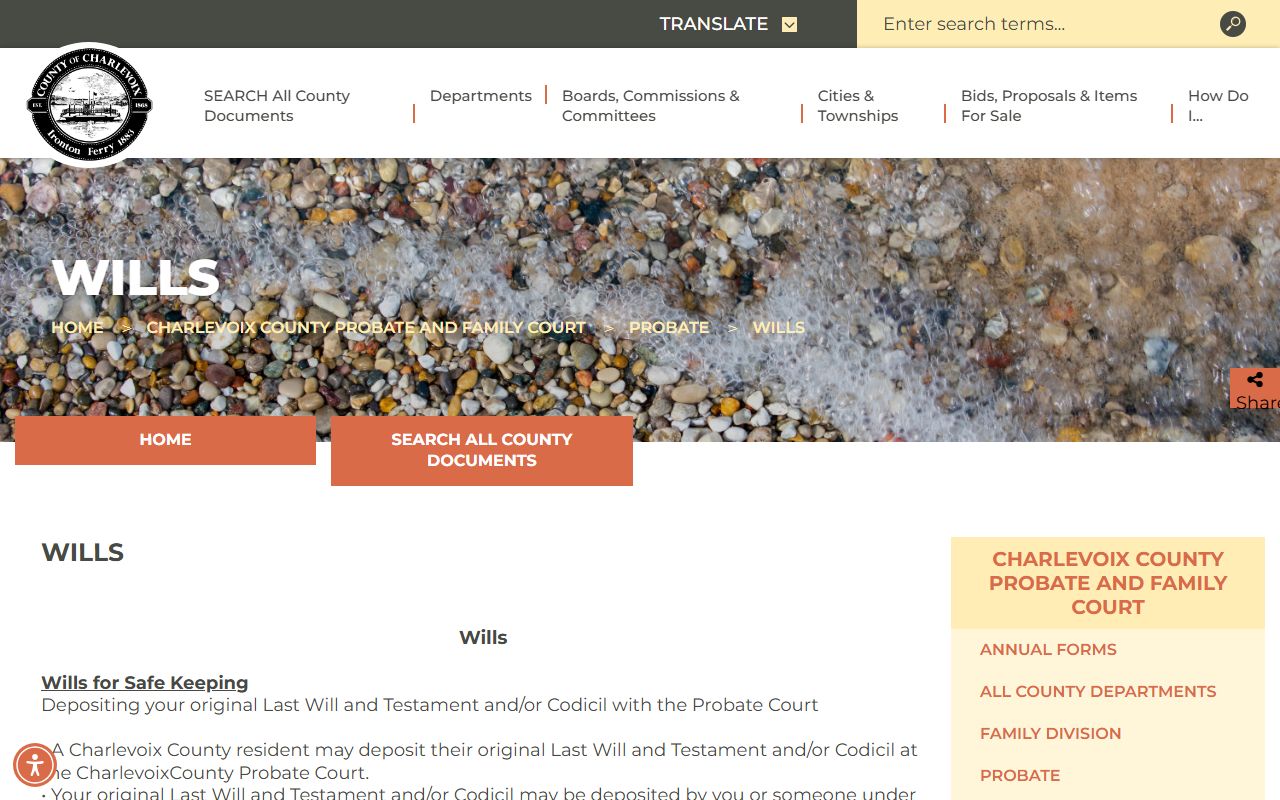
It also lists the exact forms a family needs to pull a will back out. Depositing or retrieving a will follows a set order.
- Seal the original will in a #10 envelope and write the full name, address, Social Security number, and date of birth on the outside.
- Bring the envelope to the Probate and Family Court and pay the $25 deposit fee; the clerk date-stamps it.
- To retrieve it in person, bring photo ID and a completed Withdrawal of Will form.
- To let another person retrieve it, provide a signed PC548 authorization plus that person's ID.
- To retrieve by mail, send form PC548, a $10 check or money order, and a certified-mail return receipt marked addressee only.
Note: The court accepts original wills only from Charlevoix County residents, so a photocopy or a nonresident's will cannot be deposited for safekeeping.
Name Changes Through Probate Court
A legal name change also runs through the Charlevoix County Probate and Family Court. Residents must live in the county for at least 12 months before they file. The petition fee is $187. Adults 22 and older must complete a criminal-history background check. Applicants 21 or younger can begin the case without that check. The state fingerprint fee is $43.25, and it is nonrefundable. That fee is payable to the State of Michigan. The fingerprint packet is mailed to the Michigan State Police CJIC office in Lansing. The background check usually takes about three to four weeks to clear.
Full instructions sit on the court's name change page, including the residency and fingerprint rules.
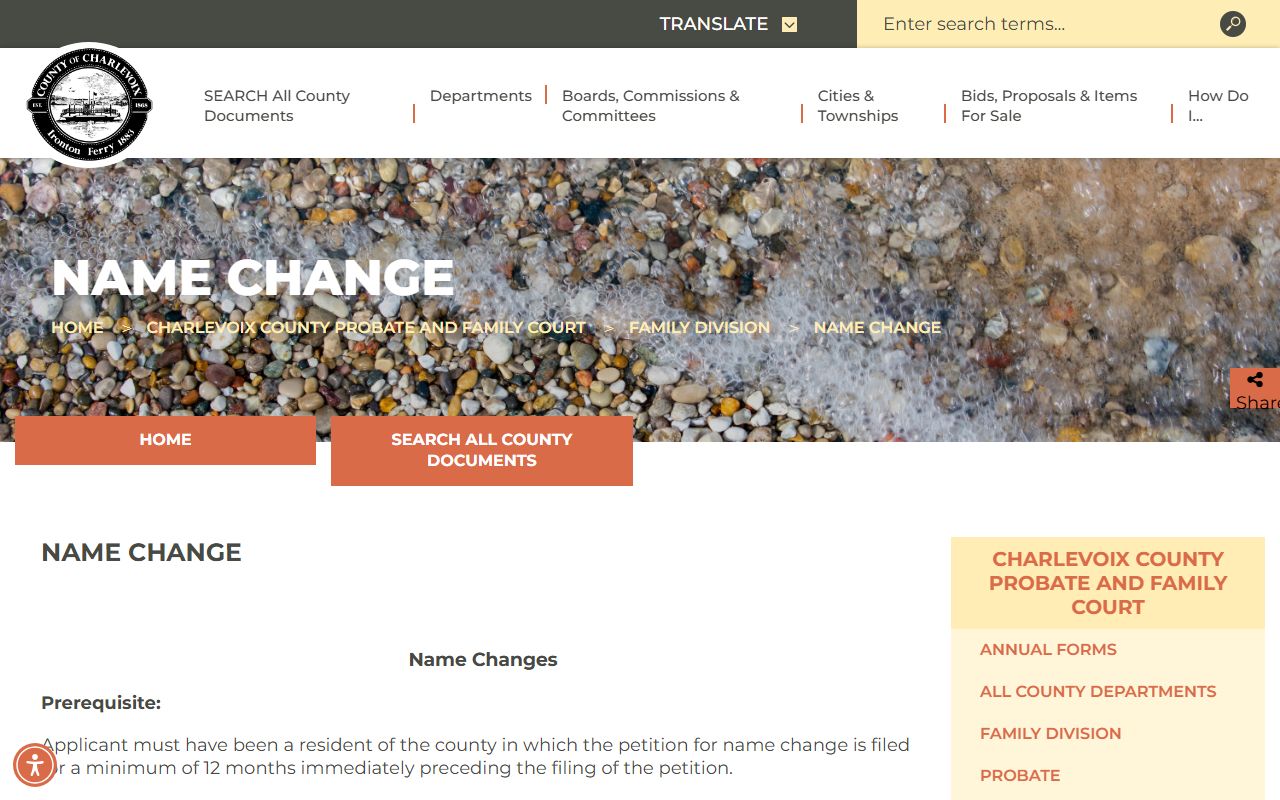
The same page notes added costs, such as newspaper publication and a certified copy of the final order.
Charlevoix County Probate Fees
Probate and name change cases carry set fees. The table gathers the main Charlevoix County probate records costs tied to will safekeeping and name changes. Estate and guardianship filings carry their own statutory fees, which the court office can confirm.
| Item | Amount |
|---|---|
| Will or codicil deposit | $25 |
| Will redeposit | $25 |
| Will retrieval by mail (with PC548) | $10 |
| Name change petition | $187 |
| State fingerprint background check | $43.25 |
How to Search Charlevoix County Probate Records
No stand-alone probate case portal exists on the county site. Instead, records flow through the countywide document portal and the statewide case-search system. For older or sealed files, the court office remains the fallback. Start online, then move to the phone or counter if the file is not posted.
- Open the county document portal and enter a name or document title in the search box.
- Narrow the results with the date range control, which ranges from the last week out to two years.
- If the file is not online, call or email the Probate and Family Court office directly.
- Check Michigan's statewide case-search site for wider docket visibility.
Note: Court records and public-records requests are not the same channel, so the court office routes probate questions by case type rather than through a general records form.
Guardianship and Conservatorship
Guardianship and conservatorship cases protect people who cannot fully protect themselves. A guardianship gives one person authority over another's personal care and daily choices. A conservatorship covers money and property instead. The court hears adult guardianship, minor guardianship, adult conservatorship, and minor conservatorship matters. It also handles cases involving developmentally disabled individuals and mental health proceedings.
Each file can hold petitions, medical reports, inventories, and annual reports. The court publishes an inventory calculator, annual forms, and a financial statement to help fiduciaries stay current. Anyone serving as a guardian or conservator must file these updates on time. Missing an annual report can trigger a court review of the appointment. The paperwork keeps the court informed and the protected person safe.
Juvenile Programs and the Family Division
The family division side of the court reaches beyond estates. Juvenile probation is handled through the Probate and Family Court. The court also runs problem-solving programs for young people. The Juvenile Drug Treatment Court serves youth on probation who struggle to stay sober. It uses frequent court dates, drug and alcohol testing, counseling, and positive activities. The goal is recovery through support and steady accountability rather than punishment alone.
The Juvenile Drug Treatment Court page describes the team and the strength-based approach behind the program.
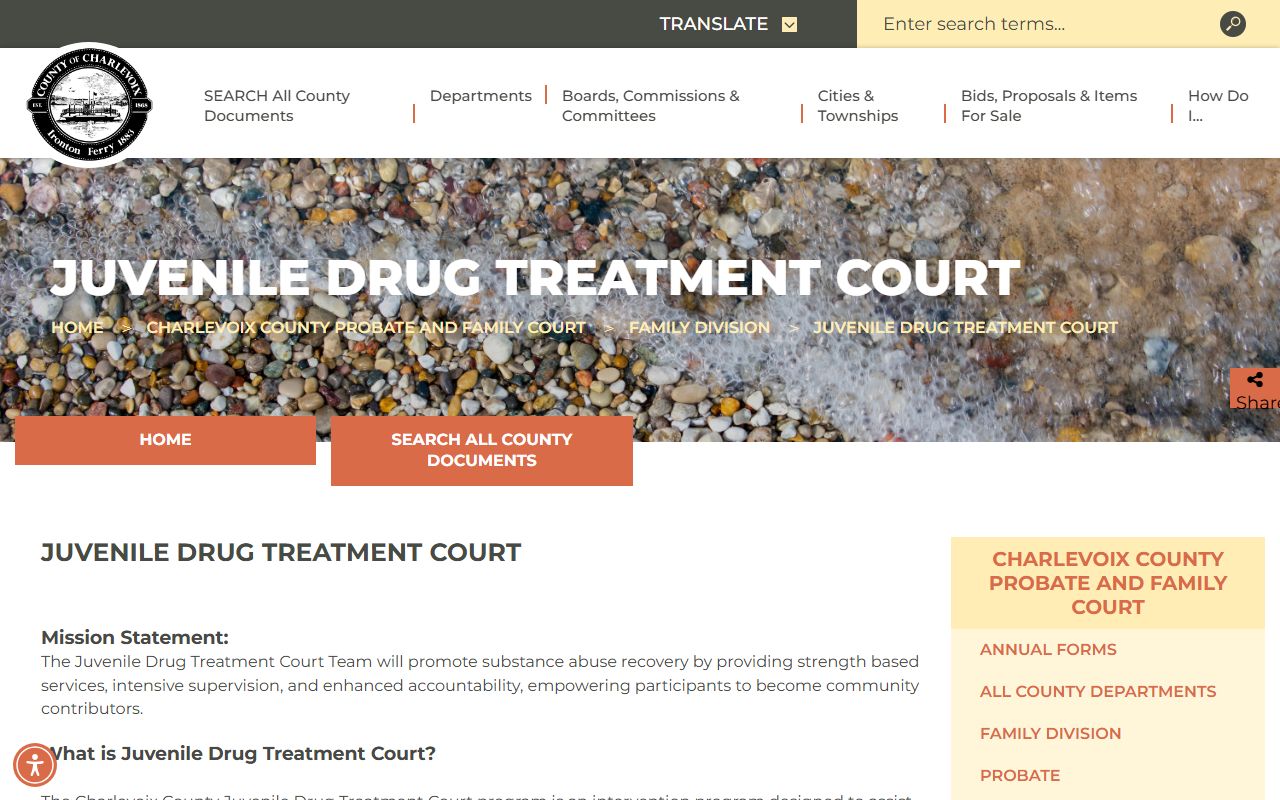
A judge, court staff, counselors, and a prosecutor all sit on that team. The court also facilitates the Round Lake Education Center. This program serves adjudicated high-school-aged youth who can no longer succeed in a regular public school. A judge must order attendance, so parents cannot simply enroll a child. Students get a structured setting with credit recovery, counseling, art therapy, life-skills groups, and physical education.
Details appear on the court's Round Lake Education Center page.
Both programs sit under the family division, which keeps juvenile services close to the court that orders them.
Note: Juvenile files tied to these programs are not open to general public browsing and are limited to people with a legitimate interest or a court order.
Contact the Probate and Family Court
The Probate and Family Court is the office to call for estate, guardianship, will, and name change questions. Staff can confirm current fees, form versions, and remote-hearing options. The office keeps standard weekday hours and answers by phone or email.
Charlevoix County Probate and Family Court
301 State St., 2nd floor
Charlevoix, MI 49720
231-547-7214
Monday to Friday, 8:00 a.m. to 5:00 p.m.
Certified copies of probate orders come from this court, while other county records are certified by the County Clerk.
Filing Rules and Court Forms
Court forms must be current to be accepted. The probate office warns that outdated SCAO forms with obsolete personal information are no longer accepted. Two forms, MC97 and MC97a, are required with most filings. These forms handle the protected personal identifying information that court rules keep off the public record. The court points to MCR 1.109(D)(9) and MCL 600.855 as the authority behind these rules. The office also posts a remote and in-person proceeding policy, a Zoom request form, Zoom instructions, and a Zoom exhibit policy for hearings held online.
Outdated SCAO forms that still request old personal identifiers are rejected. Use the current versions and file MC97 and MC97a to keep protected information off the public record.
Filers should have a few items ready before they start.
- Current SCAO or PC forms, not older versions
- Completed MC97 and MC97a protected-information forms
- The inventory calculator result for estate cases
- Annual forms or a financial statement for ongoing guardianships
- A Zoom request form when a remote hearing is needed
Restricted Charlevoix County Probate Records
Not every probate file is open to the public. Michigan law keeps several case types restricted. Juvenile records fall under MCL 712A.28, which limits access to people with a legitimate interest or a court order. Mental health proceedings are treated as confidential or limited-access files. Adoption files are court-controlled and generally closed to open browsing.
These limits protect children, patients, and families during sensitive cases. Sealed estates and any record closed by court order also stay off public display. For everything else, Michigan treats court records as public unless a statute, rule, or order says otherwise.
Access questions for a specific file are best answered by the Probate and Family Court office, since the answer depends on the case type and any order already in place.